1000W Foldable Garment Steamer: Smart B2B Buyer Guide

1000W Foldable Garment Steamer: Smart B2B Buyer Guide
At $9.20 for 300 units and $8.40 for 2,000, UAHGS12 forces a useful buying decision: pay for compact handling, or move to a larger tank. A 1000W foldable garment steamer is a portable fabric-care appliance; this model pairs a 120mL tank, 20-second heat-up and 20g/min output with a rotating handle.
// 01 — Key takeaways
Founded in 2005, Guilin Use at Home Technology Co., LTD lists a 15,000m² small-appliance facility and seven production lines. Buyers can verify these company facts in the Steam Cleaners China Trust Center.
The catalog heat-up time gives the UAHGS12 a clear quick-touch-up position.
Listed output provides a better comparison anchor than wattage alone.
The tank favors short sessions and compact storage, not long garment racks.
Catalog net weight supports travel, hotel-room and portable retail positioning.
// 02 — Buyer fit
Is the UAHGS12 1000W foldable garment steamer right for your product range?
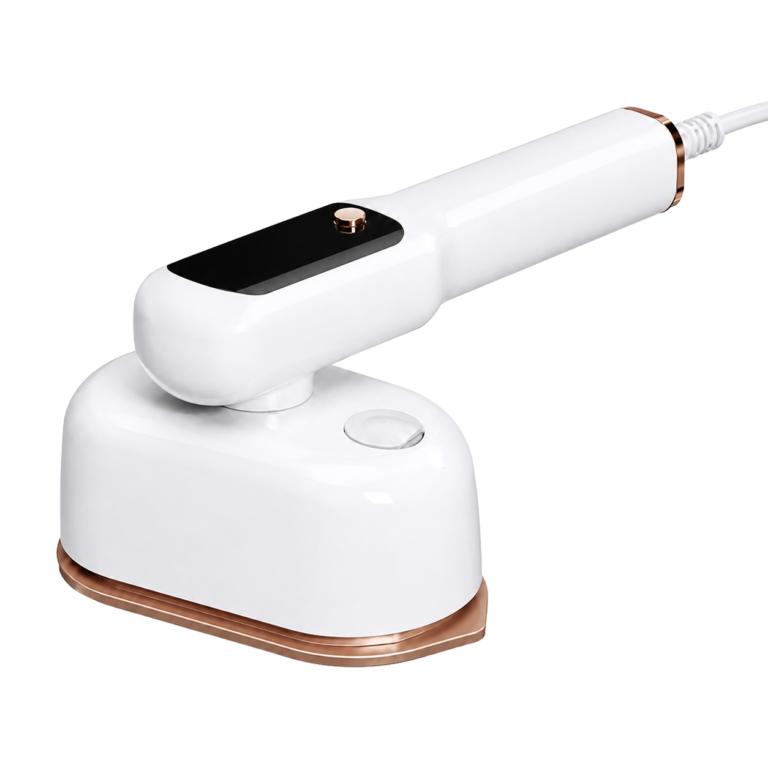
UAHGS12 fits distributors, travel-accessory ranges, hotel-room retail and private-label programs seeking a foldable 220V handheld model. Its position rests on 1000W input, three steam gears, a rotating handle and a ceramic-glaze panel in a 0.5kg body.
Who should shortlist this foldable model?
Shortlist it when customers touch up one or two garments, have limited storage, or want hanging and flat use. The handle rotates through 180 degrees, and the anti-scalding base provides a resting place. The PC-and-ABS body, 120mL tank and 20-second catalog heat-up support a compact proposition.
Where does the compact design trade capacity for portability?
The reservoir is smaller than the fetched 200mL and 300mL sibling models compared below. That reduces bulk but can increase refill frequency. Do not promise a garment count per fill: fabric area, pass speed, wrinkle depth and gear selection change water use. If runtime matters to the range, measure it on an approved sample under a repeatable buyer test.
Can it replace a conventional iron?
Not for every task. A steamer relaxes wrinkles with hot vapor and light panel contact; an iron uses pressure against a board for sharper seams and creases. Position UAHGS12 around fast setup, compact storage and two working orientations, subject to garment-care labels and the approved instructions.
// 03 — Specifications
What are the 1000W foldable garment steamer specifications?
The UAHGS12 1000W foldable garment steamer combines 1000W rated power, 220V/50Hz input, a 120mL tank and 20g/min output. Its catalog also lists three-gear adjustment, a 20-second heat-up, a 170°C ±10% bottom-plate temperature and a 1.5m power cord with 1.35m exposed length.
UAHGS12 specification sheet
Rev. 2026.08
| Spec | This model | Why it matters |
|---|---|---|
| Material | PC + ABS | Defines the main housing construction. |
| Rated voltage | 220V / 50Hz | Must match the destination market and plug program. |
| Rated power | 1000W | Sets heater input for electrical and range planning. |
| Water tank capacity | 120mL | Balances compact size against refill frequency. |
| Steam output | 20g/min | Gives buyers a stated flow for sample comparison. |
| Heating time | 20 seconds | Supports quick setup before a short session. |
| Adjustment | Three gears | Lets users select output for the intended fabric trial. |
| Bottom-plate temperature | 170°C ±10% | Requires care-label checks and controlled contact testing. |
| Power cord | 1.5m; 1.35m exposed | Helps assess reach and pack layout. |
What do the dimensions and weights tell a buyer?
The product measures 136x62x82mm and has a catalog net weight of 0.5kg. Packed dimensions are 176x96x132mm, and gross unit weight is 0.65kg. These figures support carton planning and help a retailer judge whether the “compact” claim matches the intended shelf and luggage use.
Each carton holds 30 units. The listed carton is 410x510x370mm, with 21.2kg gross weight and 0.077367 CBM. Confirm the final color box, manual, plug and accessories before treating those figures as the shipment packing list.
Which details need confirmation before market launch?
The listed electrical configuration is 220V/50Hz, so it is not a universal-voltage claim. Buyers should confirm plug type, rating label, cord, manual language and the compliance file for the destination. A physical sample should also confirm tank fitting, handle lock, gear response and base stability.
The featured record lists an anti-scalding base, measuring cup and instructions across its product information. Tie the final accessory list to the approved sample and purchase order. A marketing image alone is not an adequate pack-control document.
// 04 — Performance
How do output, tank size and heat-up work together?
The three figures describe different parts of use: the listed 20-second heat-up affects setup, 20g/min states vapor flow, and the 120mL tank limits available water. Wattage alone does not establish handling or finish quality.
Is 1000W enough for a handheld garment steamer?
Here, 1000W is paired with the catalog heat-up and output above, making UAHGS12 a candidate for compact touch-up use. It does not prove one-pass performance on every fabric. Buyers who need comparative evidence should use the same garments, fill level and orientation, then record ready time, passes and visible water behavior.
What do three steam gears change?
Three gears provide selectable output. Their practical value depends on control response and fabric, so the final manual and product page should name each setting consistently. A buyer trial should begin with the care label and a hidden area, recording any marks or excess moisture.
Can the UAHGS12 be used horizontally?
The catalog describes flat and hanging work plus dry and wet use, supported by a ceramic-glaze panel and rotating handle. Approve horizontal use only for the positions stated in the final instructions. For a sample review, observe the nozzle and tank through the intended cycle; sensitive coatings, trims and heat-reactive textiles need separate care.
A buyer should approve the whole system—heater, water path, controls, panel and pack—not the wattage printed on the front.
— Mi Lan, Founder, Guilin Use at Home Technology Co., LTD
// 05 — Safety
What safety and compliance checks matter?
A buyer-defined approval plan should cover electrical labeling, cord and plug, tank sealing, handle locking, stable warm-up, gear response and uncontrolled hot-water release. Scope it to the final 220V/50Hz configuration, market, instructions and branded packaging.
Which standard covers electric fabric steamers?
IEC 60335-2-85 covers safety requirements for household and similar electric fabric steamers with rated voltage not above 250V. Its scope also includes products used by laypeople in places such as shops, laundries and dry cleaners.
Citing a standard is not proof for an unreviewed configuration. A compliance partner should identify the applicable edition, national differences and required evidence for the exact plug, label, cord and manual.
Why should buyers test the tank and nozzle?
The U.S. Consumer Product Safety Commission clothes-steamer page records a recall involving hot-water spitting, leakage and tank-cap problems. That public case supports adding a powered water-path test after appearance inspection.
For a commissioned sample test, fill only to the mark, observe warm-up and intended orientations, then inspect the tank, cap, seals and panel after cooling. Stop if water escapes uncontrollably or the handle fails to lock. These are recommended buyer checks; this article does not present them as completed UAHGS12 factory-test results.
What belongs in a sample approval record?
Identify model, voltage, plug, label, cord, tank, controls, panel, base, accessories and manual revision. Add measured ready time, gear response, leakage observations, surface stability and target-fabric results when those tests are actually commissioned. Retain dated photos and a signed specification with the purchase order; no such first-hand test record is claimed here.
// 06 — Commercials
What do the real price tiers and packing data mean?
The 1000W foldable garment steamer lists $9.20 at 300 units, $8.90 at 500, $8.60 at 1,000 and $8.40 at 2,000. The packaging record separately lists a standard MOQ of 1,000 units, so buyers should confirm which threshold applies to the requested configuration and customization.
What are the catalog price tiers?
The listed tiers below are real catalog values for the featured SKU. They exclude freight, duty, destination tax, custom packaging and testing. Use them for initial product-cost comparison, then obtain a quotation tied to the final color, branding, plug, pack and Incoterm.
| Quantity | Listed discount | Listed unit price | Planning note |
|---|---|---|---|
| 300 | $0.00 | $9.20 | First catalog price tier |
| 500 | $0.30 | $8.90 | Second catalog price tier |
| 1,000 | $0.60 | $8.60 | Matches the listed standard MOQ field |
| 2,000 | $0.80 | $8.40 | Lowest listed tier |
How should a buyer handle the MOQ difference?
Treat the first price tier and the standard MOQ field as two separate catalog facts. Ask the sales team to state the order threshold for the exact program in writing. Existing-color stock, a standard pack and a private-label run can follow different commercial conditions.
The quotation should identify quantity, unit price, included accessories, artwork, voltage, plug, pack, payment milestones and Incoterm. It should also state the production lead time for the approved scope. That document, rather than a general product-page figure, controls the order.
What does carton data contribute to landed-cost planning?
Thirty units per carton, a 410x510x370mm carton and 21.2kg gross weight let freight partners begin a volume and handling review. Keep the exact catalog CBM value of 0.077367 with the initial calculation. Confirm final dimensions after branded packaging is approved.
Container-loading figures can change when the pack changes, so do not treat a preliminary quantity as a shipping promise. Build landed cost from the approved carton, named port, current freight quote, duty treatment and destination charges.
// 07 — Comparison
How does UAHGS12 compare with fetched sibling models?
The UAHGS12 1000W foldable garment steamer is the smallest-tank option in this fetched four-model set. UAH48P offers a larger 200mL tank at 800W; UAHGS01 combines 1200W with 200mL; and UAHGS06 moves to 1500W, 300mL and 27g ±2/min output.

Which model fits each range position?
Choose UAHGS12 for a compact 0.5kg format, rotating handle and three gears. Choose UAH48P when entry price and a 200mL tank matter more than foldability. UAHGS01 suits a 1200W steel-panel position, while UAHGS06 targets a larger reservoir and higher stated output.
| Model | Power | Tank | Output / heat-up | Voltage | First listed tier |
|---|---|---|---|---|---|
| UAHGS12 Compact foldable | 1000W | 120mL | 20g/min; 20 seconds | 220V / 50Hz | $9.20 at 300 units |
| UAH48P | 800W | 200mL | Two steam levels; heat-up not listed in fetched specs | 100-240V | $4.30 at 1,000 units |
| UAHGS01 | 1200W | 200mL detachable | 20g ±2/min; 15 seconds | 220-240V / 50/60Hz | $9.69 at 50 units |
| UAHGS06 | 1500W (1350W at 110V) | 300mL detachable | 27g ±2/min; 20 seconds | 220V / 50Hz | $8.28 at 50 units |
What should buyers compare in physical samples?
Compare grip, folded size, tank removal, refill process, controls, panel contact, warm-up, output consistency and cord reach. Use identical garments and water levels. Repeat the test after the sample cools so the second run does not inherit heat from the first.
Also compare box size, accessory count, manual clarity and rating-label placement. A lower unit price can lose its advantage if the pack is too large, the instructions require rework or the configuration does not fit the destination market.
// 08 — Order control
How should buyers control a UAHGS12 order?
No dated sample measurements, inspection photos or batch records were available for this guide. The four steps below are therefore a recommended buyer control plan, not a claim that these tests have already been completed for UAHGS12.
Configuration review
Buyer and supplier should compare housing color, logo position, rotating-handle parts, panel, tank, base and accessories with the chosen catalog configuration. Requests outside it need feasibility review before sample sign-off; this is narrower than claiming in-house tooling.
Buyer-defined electrical inspection
The purchase order should state the 1000W configuration, three-gear controls, cord, plug, rating label and manual. If the buyer requires powered inspection or endurance sampling, the method, sample size and acceptance criteria should be written into the inspection brief; no PCBA burn-in result is claimed here.
Buyer-defined water-path inspection
A commissioned checklist can cover tank fit, seals, warm-up, visible output, handle locking and base stability. It should name the sample level, method and response to failure, and retain dated results rather than implying a test occurred.
Documents and warranty terms
CE and RoHS are listed company capabilities, but the buyer must review documents for the final model and market. The product record states a 12-month warranty; the quotation or contract should define its commercial process.
// 09 — FAQ
1000W foldable garment steamer FAQ
These answers separate catalog specifications from outcomes that need buyer testing.
Is a 1000W garment steamer good for travel?
Can a garment steamer replace an iron?
What wattage should a handheld garment steamer have?
Why can a garment steamer spit hot water?
What are the UAHGS12 MOQ, lead time and warranty?
// 10 — Conclusion
Should you source the UAHGS12?
Shortlist this model when the brief prioritizes a 0.5kg foldable body, three gears, 20-second catalog heat-up and hanging or flat use. Choose a larger-tank sibling when session length matters more. Before ordering, lock the 220V/50Hz configuration, plug, label, manual, branding, accessories and carton in the quotation.
Featured model
UAHGS12 foldable handheld garment steamer
1000W · 120mL · 20g/min · 20-second heat-up · three gears
Similar products
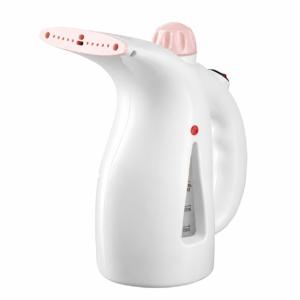

Plancha de vapor portátil para prendas, 700W, 110ml, 25-30g/Min

Buharlı Giysi Düzleştirici, 1200W, 200ml, Katlanabilir, Çelik Panel

Parownica do ubrań, 1500W, 300ml, Głowica 7-otworowa
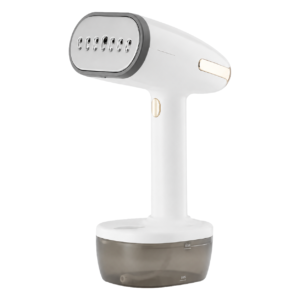
Vaporizador de Roupas, 1800W, 350ml, Placa de Aquecimento de Cerâmica
Ready to order or need a wholesale quote?
Steam Cleaners China manufactures steam cleaners and garment steamers direct from our Guilin, China factory. OEM, private-label and B2B orders are welcome. Tell us your market, plug, packaging and volume.