Handheld Garment Steamer 700W: B2B Buyer Guide

Handheld Garment Steamer 700W: B2B Buyer Guide
At $6.90 for one sample and $6.50 at 1,000 units, UAH7P makes a clear trade: compact cost and travel reach over heavy-fabric power. A handheld garment steamer is a portable wrinkle-release appliance, and this 700W model pairs a 110ml tank with 25-30g/min output for short, fast sessions.
// 01 — Key takeaways
Founded in 2005, Guilin Use at Home Technology Co., LTD operates a documented 15,000m² facility; review the factory facts in the Steam Cleaners China Trust Center.
The UAH7P catalog heat-up time supports quick hotel-room and travel touch-ups.
Listed steam output matters more than wattage alone when buyers compare compact models.
The tank supports a listed 8-10 minutes of continuous steam in a portable body.
The voltage range suits multi-market programs, subject to the correct plug and market label.
// 02 — Buyer fit
Is this 700W handheld garment steamer right for your range?
The UAH7P fits travel, hotel amenity, gift and entry-price retail programs that value low weight, dual-voltage reach and short sessions. It is not the strongest option for repeated work on dense cotton or linen. Buyers should choose it when portability and range planning outrank maximum heater power.
What does the 700W rating tell a buyer?
The 700W rating tells you the heater input, not the full user result. UAH7P pairs that input with a listed 30-second heat-up and 25-30g/min steam output. Those three figures belong together in a buying decision.
A higher watt figure can help a model recover between passes, but housing design, water path and nozzle behavior also shape the output. This is why a buyer should compare the catalog steam rate and warm-up time instead of ranking samples by wattage alone.
Who should shortlist the UAH7P?
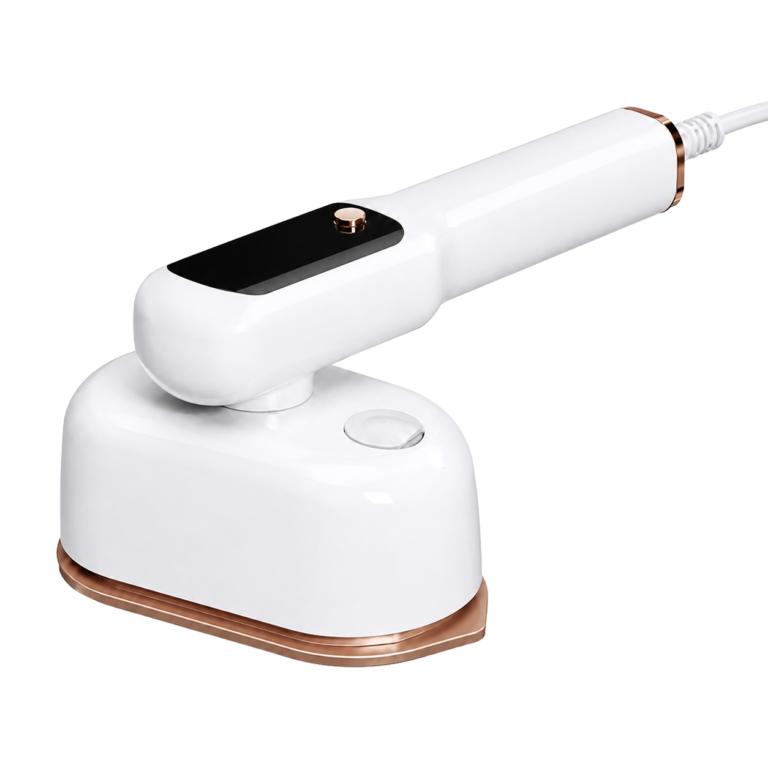
Shortlist UAH7P for customers who pack light and treat one or two garments at a time. Its 0.58kg net weight and 145x75x205mm size support a compact shelf story. The 1.5m cord gives useful reach without turning the item into a cordless product.
Hotels can evaluate it for guest-room lending or sale where local policy permits. Distributors can use it as an opening price point below larger foldable models. Private-label buyers can also test logo, color, packaging and accessory choices on a sample before a custom run.
Where is the trade-off?
The main trade-off is session depth. The 110ml tank gives a listed 8-10 minutes of continuous steam, which is enough for quick care but not a long rack of clothing. A compact ABS body also differs from a flat-press model with a heated steel or ceramic panel.
State that boundary clearly in product copy. It reduces the chance that a buyer expects iron-style creases or full wardrobe throughput from a travel-size handheld garment steamer. Honest positioning makes the 700W specification useful instead of defensive.
// 03 — Specifications
What are the UAH7P specifications?
UAH7P combines a 700W heater, 100-240V input, 110ml tank and 25-30g/min output in an ABS body. It heats in 30 seconds, runs for 8-10 minutes and includes a brush plus measuring cup. These are catalog values, not estimates or sibling-model assumptions.
UAH7P handheld garment steamer spec sheet
Rev. 2026.08
| Spec | This model | Why it matters |
|---|---|---|
| Material | ABS | Keeps the housing light for travel use. |
| Rated power | 700W | Defines heater input for the stated duty. |
| Voltage | 100-240V | Supports multi-market programs with the correct plug and label. |
| Water tank | 110ml | Balances portability with an 8-10 minute listed run. |
| Steam output | 25-30g/min | Shows the flow available for wrinkle release. |
| Heat-up time | 30 seconds | Fits quick use before travel or meetings. |
| Steam temperature | 100±5°C | Gives buyers a defined operating specification. |
| Cord length | 1.5m | Helps buyers assess room layout and reach. |
| Accessories | Brush, measuring cup | Supports filling and fabric-contact choices. |
What packaging data affects freight planning?
The packed unit is 160x90x220mm and 0.94kg gross. Each carton holds 8 units, measures 360x175x450mm and has a listed gross weight of 8kg. Its catalog volume is 0.02835 CBM per carton.
The ERP record also lists 7,336 units for a 20-foot container, 15,238 for a 40-foot container and 19,188 for a 40HQ. Treat these as catalog loading figures for initial planning. Confirm the final pack, marks and loading plan before a purchase order.
// 04 — Performance
How do output, tank size and heat-up work together?
The UAH7P’s 25-30g/min output, 110ml tank and 30-second heat-up define a short-session tool. Output tells buyers the listed flow, tank size limits duration, and heat-up affects convenience. No single number proves performance on every fabric, so sample testing must combine all three.
How many garments fit one fill?
There is no honest universal garment count because fabric area, wrinkle depth, pass speed and operator habit vary. The defensible figure is the listed 8-10 minutes of continuous steam. Buyers can convert that time into their own garment count during a sample trial.
Build a simple test rack that reflects your actual assortment. Use the same fill level, hanging method and pass count for each sample. Record start time, ready time and finish time. This produces a buyer-owned result without turning a variable garment count into a factory promise.
Can 700W handle heavy fabrics?
A 700W handheld garment steamer can address light shirts and travel garments, but dense cotton or linen may require slower passes or a higher-power format. UAH7P should be judged against the intended fabric mix, not against an abstract idea that more watts always means a better product.
Use the brush only where the garment-care label and your trial support it. Test a hidden area first on sensitive finishes. For high-volume work or flat pressing, compare a model with a heated panel, more power or a larger reservoir.
Can a steamer replace an iron?
A steamer releases wrinkles with moist heat while an iron presses fabric against a flat hot plate. That difference matters. UAH7P is well suited to hanging touch-ups, but buyers should not promise the crisp crease or collar finish produced by a conventional iron.
The distinction also improves merchandising. Sell speed, portability and a no-board workflow. Avoid claiming one compact tool covers every pressing task. A clear use case lowers returns and helps distributors place the model beside, rather than falsely above, irons.
Choose the garment steamer by the job it must finish, then verify output, duration and handling on your own fabric set.
— Mi Lan, Founder, Guilin Use at Home Technology Co., LTD
// 05 — Safety
What safety checks matter before a bulk order?
A bulk approval should cover electrical labeling, cap and tank sealing, nozzle behavior, cord condition, stable warm-up and the intended operating angle. The IEC 60335-2-85:2022 fabric-steamer standard covers household and similar electric fabric steamers rated up to 250V, making it a useful requirements reference.
Why should buyers test leakage and spitting?
Hot water is the core handling risk. The U.S. Consumer Product Safety Commission’s clothes-steamer recall page documents cases involving leaking tanks, detached caps and expelled hot water. That history makes a wet run, fill-cap check and nozzle observation essential during sample approval.
Test at the marked maximum fill, through warm-up and through a full working cycle. Inspect the cap and seals after cooling. Stop any trial that shows uncontrolled leakage. A passing appearance check does not replace a powered water-path test.
What does IEC 60335-2-85 cover?
IEC 60335-2-85 is a safety standard for electric fabric steamers intended for household and similar use. Its scope includes appliances rated no more than 250V, including direct-current and battery-operated products. Buyers should discuss the applicable edition, market deviations and test plan with their compliance partner.
Do not treat a standard name as proof that every configuration is certified. The plug, voltage label, cord, manual, packaging and final market all affect the compliance file. Ask for the documents relevant to the exact approved order.
How should a buyer run a fabric trial?
Start with the garment-care label, then use a hidden area and the intended working position. Hold the fabric on a hanger or support; never place a hand behind the steaming area. Let the sample cool before checking finish, marks, water spots and handling comfort.
Run the same trial across several fabric weights. Record whether the model needs one pass or repeated work. This gives the sales team fair language about light, medium and dense fabrics without inventing a universal performance claim.
// 06 — Commercials
What do MOQ, price and lead time mean for sourcing?
UAH7P lists one sample at $6.90, 500 units at $6.70 and 1,000 units at $6.50. Custom production has a catalog MOQ of 500 units. Typical lead time is 15-30 days after order and artwork confirmation, with FOB China, EXW or CIF options.
What are the real UAH7P price tiers?
The catalog tiers below are the commercial facts available for this model. They do not include freight, duty, destination tax, custom packaging or market testing. Ask for a current quotation tied to the final specification and Incoterm before using them in a landed-cost model.
| Listed quantity | Discount | Listed unit price | Use in planning |
|---|---|---|---|
| 1 | $0.00 | $6.90 | Sample-level evaluation |
| 500 | $0.20 | $6.70 | Matches the custom-production MOQ |
| 1,000 | $0.40 | $6.50 | Second listed bulk tier |
What can a private-label buyer customize?
OEM, ODM and private-label work can cover color, logo, packaging and included accessories where the approved housing allows. Send the target market, voltage, plug, label language, pack artwork and expected volume. The factory can then confirm what applies to the exact UAH7P program.
A pre-production sample is the decision point. Approve appearance, steam behavior, label placement, instructions and pack contents together. Changes after sample sign-off can affect both timing and price, so keep one controlled specification sheet with the purchase order.
How do payment and shipping terms work?
The model information lists FOB China by default, with EXW and CIF options, plus 30/70 T/T terms for most wholesale orders. Those are available structures, not a promise for every buyer. The quotation should state the named place, currency, payment milestones and included documents.
Lead time is typically 15-30 days after order and artwork confirmation. Plan extra time for sample review, artwork corrections and market testing. The 12-month warranty should also appear in the sales contract with the agreed after-sales process.
// 07 — Comparison
How does the UAH7P compare with higher-power models?
UAH7P is the light, dual-voltage entry in this three-model comparison. UAHGS08 adds a foldable handle, steel panel and 1,000W heater. UAHGS03 adds 1,200W, three steam levels and an LED display. Every number below comes from a direct SKU fetch, not a random sibling summary.

Which model fits which price position?
Choose UAH7P for the lowest listed entry price and broad voltage range. Choose UAHGS08 for a foldable 220V model with a stainless steel panel. Choose UAHGS03 where a 220V LED display and three output levels support a more feature-led shelf position.
| Model | Power | Tank | Steam and heat-up | Voltage | First listed tier |
|---|---|---|---|---|---|
| UAH7P Travel value | 700W | 110ml | 25-30g/min; 30 seconds | 100-240V | $6.90 at 1 unit |
| UAHGS08 | 1,000W | 140ml detachable | 15g ± 2/min; 20 seconds | 220V / 50-60Hz | $8.25 at 50 units |
| UAHGS03 | 1,200W | 150ml non-detachable | 10/15/20g ± 2/min; 20 seconds to steam | 220V / 50Hz | $9.80 at 18 units |
What should buyers compare in samples?
Compare ready time, output consistency, tank handling, grip, cord reach and results on the target fabric set. Also compare the pack, instructions and plug because shelf readiness is part of the product. Use identical fill and fabric conditions so the result reflects model differences.
The three models do not serve one identical brief. UAH7P favors compact travel use. UAHGS08 combines foldability with a steel panel. UAHGS03 emphasizes adjustable output and display feedback. A good range may use more than one position instead of forcing one winner.
// 08 — Order controls
How should buyers control a private-label garment steamer order?
Keep the approved sample, product specification, labels, pack contents, destination-market documents and inspection plan tied to one purchase order. Confirm each checkpoint with the sales team before relying on it for bulk approval.
Define the exact configuration
Record the housing finish, tank, color, logo, packaging and accessories that apply to the order. Confirm which requests use the existing UAH7P configuration and which require a separate feasibility review.
Lock the approved sample and specification
Document the heater rating, voltage, plug, cord, controls, labels, manual and pack contents. Link the approved sample and specification sheet to the purchase order so changes remain visible.
Agree the inspection plan
Define the appearance, fill-cap, leakage, nozzle, warm-up, accessory and carton checks required for acceptance. The plan should state the sampling level, test method and action for a failed result.
Verify market documents and warranty terms
CE-marking and RoHS-compliance documentation may apply; verify the exact UAH7P configuration and destination-market file before ordering. The quotation and sales contract should also state the agreed 12-month warranty route.
// 09 — FAQ
Handheld garment steamer FAQ
Buyers most often ask about wattage, iron replacement, travel voltage, hot-water spitting and commercial terms. The answers below separate UAH7P catalog facts from use-dependent results. They also show where a sample trial or market-specific check must replace a broad promise.
What wattage should a handheld garment steamer have?
Can a handheld garment steamer replace an iron?
Is the UAH7P suitable for international travel?
Why do garment steamers spit hot water?
What are the MOQ, lead time and warranty for UAH7P?
// 10 — Conclusion
Should you source the UAH7P handheld garment steamer?
Source this UAH7P handheld garment steamer when your brief prioritizes portable touch-ups and broad voltage compatibility at an entry price. Choose a higher-power sibling when dense fabric, flat pressing or feature depth matters more. Approve the final choice through a controlled sample trial.
Before placing a handheld garment steamer order, confirm the plug, label, destination-market file, pack contents and current quotation. Test ready time, leakage, handling and finish on the fabrics your customers actually use.

Featured model
UAH7P portable handheld garment steamer
700W · 110ml · 25-30g/min · 30-second heat-up · 100-240V
Similar products
Parowiec do odzieży, 1800W, 350ml, Ceramiczna płyta grzewcza
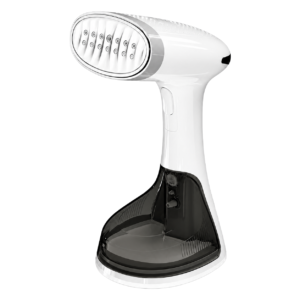
Parownica do ubrań, 1650W, 320ml, składana, panel stalowy
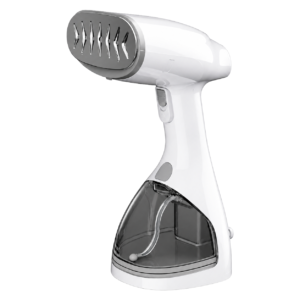
Parownica do ubrań, 1800W, 320ml, 2 biegi, sterowanie dotykowe

Garment Steamer, 1000W, 140ml, Foldable, Steel Panel

Відпарювач для одягу, 1200W, 150ml, 3 рівні, LED-дисплей
Ready to order or need a wholesale quote?
Steam Cleaners China manufactures steam cleaners and garment steamers direct from our Guilin, China factory. OEM, private-label and B2B orders are welcome. Tell us your market, plug, packaging and volume.