1200W Garment Steamer: What a 100mL Tank Changes for Buyers

1200W Garment Steamer: What a 100mL Tank Changes for Buyers
At the listed 20g/min output, a 100mL tank holds roughly five minutes of water at continuous full flow, so capacity—not 1200W alone—can decide whether a private-label line fits quick touch-ups or longer garment rounds. A 1200W garment steamer is a handheld fabric-care appliance that uses heated steam and a hot panel to relax and press wrinkles.
// 01 — Key takeaways
Rated power on the UAHGS11, paired with a listed 20-second heating time.
Compact tank capacity favors short touch-ups over long, uninterrupted garment rounds.
Catalog steam output; test each of the six gears for the intended fabric mix.
Cast-aluminum panel supports hanging, flat, dry, and wet ironing modes.
Our Guilin factory has 205 workers and has operated since 2005. See the documented factory scale in our Trust Center.
// 02 — Workload fit
Which buyer does a 100mL tank suit?
A 100mL tank suits retail, travel, showroom, and hospitality programs built around short garment touch-ups. It is less suited to operators who want long continuous sessions without refilling. The buying decision should start with garments per task, not with wattage or screen features in isolation.
Short touch-ups are the natural use case
The 1200W garment steamer combines a compact tank with a 0.75kg net weight and a 270×105×90mm body. Those dimensions make the unit easier to place in a retail box, guest-room cupboard, travel assortment, or housekeeping cart. The anti-scalding base also gives the hot unit a defined resting point between garments.
At the listed maximum output, dividing 100mL by 20g/min gives a nominal five-minute throughput reference. That calculation is a sizing tool, not a runtime promise. Six steam gears, pauses, warm-up, and water left inside the flow path all change elapsed use. A buyer should time the exact duty pattern planned for the market.
Long rounds call for a larger reservoir
A team processing a rack of uniforms or a full fitting-room return cycle may spend more time refilling a 100mL model. The directly fetched UAHGS08 has a 140mL detachable tank, while the UAHGS04 has a 320mL detachable tank. Both provide a useful capacity contrast without treating one format as universally superior.
The right question is therefore “How many garments must one fill cover?” A distributor can turn that workload into a trial: choose the typical shirt, dress, or jacket mix; use the intended gear; log active steam time; and count completed pieces before refill.
Six gears support range, not extra water
The six settings give the operator more output choices, but they do not enlarge the reservoir. Lower gears may extend working time for lighter fabrics, while a higher setting uses the available water faster. The gear interface matters most when the brand will teach a repeatable setting by fabric category.
// 03 — Specifications
Which 1200W garment steamer specs matter most?
The decisive UAHGS11 specifications are 1200W power, 20g/min steam, a 100mL tank, six gears, and a 20-second heat-up. Buyers should also record the 220V/50Hz rating, panel temperature, cord length, and materials because these facts govern market fit, handling, and the purchase-order description.
Read power, output, and capacity together
A 1200W garment steamer rating describes electrical input; it does not prove steam volume on its own. The UAHGS11 separately lists 20g/min output and a 100mL tank. Together, the three values describe heater demand, water use, and refill frequency. The 20-second heat-up then adds the waiting-time dimension.
The listed 105–120°C steam temperature and 170°C ± 10% panel temperature serve different functions. Steam carries heat and moisture to the fibers. The metal panel provides direct contact for flat pressing. Operators should always follow the garment care label and begin with the least aggressive setting suitable for the material.
Panel construction changes the operating mode
The seven-hole panel uses cast aluminum, while the housing combines PC, ABS, and aluminum die-casting. The product supports flat, hanging, dry, and wet ironing. This makes it closer to a hybrid steam iron than a vertical-only nozzle, which matters for collars, hems, and surfaces that benefit from contact pressure.
New Mexico State University explains that heat, moisture, and pressure should follow fiber content, weave, texture, finish, and the care label. Its pressing guidance is a useful basis for a fabric test matrix rather than a claim that one setting fits every textile.
Voltage and cord details belong on the PO
The catalog configuration is 220V/50Hz with about 1.5 meters of exposed cord. Do not translate that into a universal-voltage claim. The market brief should name voltage, frequency, plug, label language, and destination. Any electrical variant belongs in the agreed specification before production begins.
UAHGS11 spec sheet
Rev. 2026.08
| Spec | This model | Why it matters |
|---|---|---|
| Rated power | 1200W | Sets electrical load and supports the listed heating system |
| Rated voltage | 220V / 50Hz | Must match the destination-market build |
| Water tank | 100mL | Positions the model for short touch-up cycles |
| Steam output | 20g/min | Connects tank capacity to water-throughput planning |
| Steam gears | 6 | Lets the operator adapt output to the fabric and task |
| Heating time | 20 seconds | Defines start-up delay for repeated tasks |
| Steam temperature | 105–120°C | Provides the catalog steam-temperature range |
| Panel temperature | 170°C ± 10% | Relevant to flat pressing and fabric trials |
| Panel | 7-hole cast aluminum | Distributes steam across the contact face |
| Materials | PC + ABS + aluminum die-casting | Defines the construction named in the sourcing file |
| Net weight | 0.75kg | Affects one-hand handling and retail positioning |
| Product size | 270×105×90mm | Supports shelf, luggage, and storage planning |
Catalog figures above describe the current UAHGS11 record. The final signed specification should be checked against the approved order sample once, before mass production.
// 04 — Comparison
How does UAHGS11 compare with larger tanks?
UAHGS11 sits between the directly fetched UAHGS08 and UAHGS04 on power, but it has the smallest tank of the three. Its distinguishing feature is six steam gears with a hot cast-aluminum panel. The other two models trade that control pattern for more reservoir capacity and detachable tanks.
| Model | Power | Tank | Steam output | Heat-up | Control / format | Catalog entry price |
|---|---|---|---|---|---|---|
| UAHGS11 | 1200W | 100mL | 20g/min | 20 seconds | 6 gears; 7-hole cast-aluminum panel | $9.80 at 500 units |
| UAHGS08 | 1000W | 140mL detachable | 15g ± 2/min | 20 seconds | Foldable; stainless-steel panel | $8.25 at 50 units |
| UAHGS04 | 1600–1650W | 320mL detachable | 30g ± 2/min | 20 seconds | 3 levels; stainless-steel panel | $11.38 at 4 units |
Choose UAHGS11 for control in a compact format
The 1200W garment steamer offers the most listed steam gears in this three-model comparison. It also has the smallest reservoir. That combination makes sense when a brand wants a screen-led, selectable experience for short tasks and accepts more frequent filling as the capacity trade-off.
Choose UAHGS08 when folding and tank removal lead
The UAHGS08 is lighter at 0.6kg, folds, and uses a detachable 140mL tank. Its output is lower at 15g ± 2/min and it has a stainless-steel panel. It gives a travel program a different story: folding storage and easy tank handling instead of six output gears.

Choose UAHGS04 when reservoir and output lead
The UAHGS04 increases the tank to 320mL and the listed output to 30g ± 2/min. Its 1600–1650W rating and larger tank suit longer workloads, though the product and packaging format differ. The comparison should therefore use workload and shelf position, not price alone.
Tank size sets the interruption pattern; wattage alone cannot tell a buyer how a garment round will flow.
— Mi Lan, Founder, Guilin Use at Home Technology Co., LTD
// 05 — Sample test
What should a buyer sample test measure?
A useful sample test records heat-up, steam stability, water ejection, leakage, panel temperature, gear behavior, and fabric results. It should reproduce the intended orientation and duty cycle. A pass-or-fail sheet turns the 1200W garment steamer catalog into evidence the purchasing and quality teams can use.
Measure heat-up and recovery by gear
Start with room-temperature water and a dry unit. Record time to ready indication, time to stable visible output, and recovery after a pause. Repeat the sequence on all six gears. The catalog states 20 seconds, so the protocol should define exactly what event marks “ready” rather than mixing panel heat with steam output.
Test for droplets, leaks, and handling temperatures
The U.S. Consumer Product Safety Commission lists clothes-steamer recalls involving hot-water spitting, leaking, and cap failures. Its clothes steamer recall page makes water ejection a concrete failure mode for sample acceptance. Inspect the tank connection, panel holes, base, handle, and cord entry during repeated cold and warm starts.
Because the 1200W garment steamer can operate in flat and hanging modes, run only the orientations allowed by its instructions. Record droplets on a dark test cloth, leakage mass or visible wetting, and accessible-surface temperature at defined points. A note such as “looked fine” cannot support a shipment decision.
Build a fabric matrix from care labels
Use representative fabrics from the target market, beginning at the lowest practical gear. Record wrinkle release, gloss, flattening, water marks, and drying time. The University of Tennessee Extension steamer instructions recommend securing the parts, using downward strokes, switching off after use, and allowing the garment to dry.
The matrix should separate hanging steam from panel contact. A fabric may respond well to moisture but poorly to direct heat. This distinction is particularly important because the product supports wet, dry, flat, and hanging use rather than only one steaming method.
// 06 — Commercials
How do 1200W garment steamer price tiers change planning?
UAHGS11 pricing falls from $9.80 at 500 units to $8.70 at 3,000 units in the catalog tiers. The unit price is only one input. Carton count, gross weight, dimensions, branding scope, destination, and Incoterm determine how the quote becomes a landed-cost model.
Use the exact catalog tier, not an average
| Order quantity | Catalog unit price | Difference from entry tier |
|---|---|---|
| 500 units | $9.80 | Entry tier |
| 1,000 units | $9.50 | $0.30 lower per unit |
| 2,000 units | $9.30 | $0.50 lower per unit |
| 3,000 units | $8.70 | $1.10 lower per unit |
These are real UAHGS11 catalog tiers, not freight-inclusive offers. The product record states FOB China as the standard term and allows EXW or CIF on request, with 30/70 T/T terms. A formal quotation connects the selected tier to customization and destination.
Pack data turns units into logistics
This first-hand packing figure lets a buyer model cartons, handling weight, warehouse positions, and freight volume. The individual retail box is listed at 290×95×110mm, with 0.75kg net and 0.88kg gross product weight. The included accessory set is a base, measuring cup, and instruction manual.
Customization can move the commercial plan
Logo, color, packaging, manual language, plug, voltage, and compliance labeling should appear in the request for quotation. A change that affects material, tooling, printing, or test scope can alter price or lead time. The catalog lead time is 15 to 30 days after order and sample confirmation.
// 07 — Buyer fit
Who should shortlist this 1200W garment steamer?
Distributors should shortlist UAHGS11 when their customer values selectable steam, compact storage, flat-and-hanging use, and a visible control experience. Buyers should move toward a larger-tank sibling when uninterrupted workload matters more than size. The product fits a defined use case, not every garment-care program.
Retail and private-label programs
The 1200W garment steamer gives retail packaging several specific claims that come from its catalog record: 1200W, 100mL, six gears, a seven-hole cast-aluminum panel, and 20-second heating. OEM, ODM, custom branding, packaging, and color are available where order volume and the existing housing allow.
Hotels and showroom touch-ups
A hotel room, fashion showroom, or fitting area often needs one garment corrected quickly rather than a full laundry shift. The 0.75kg body and anti-scalding base support that short-task pattern. The operating guide must still control filling, placement, hot surfaces, and garment-label decisions.
High-throughput operators need another format
A 100mL 1200W garment steamer is not the natural first choice for uninterrupted racks. The UAHGS04 comparison shows what a larger handheld reservoir looks like, while a standing model can move the program further toward sustained use. Choose the format after timing the actual garment route.
// 08 — Manufacturing
How do we manufacture the UAHGS11?
Guilin Use at Home Technology Co., LTD builds the 1200W garment steamer through tooling and molding, heater-pump and PCBA preparation, functional quality control, and order-specific compliance work. Its documented capacity of 100,000 units per month and service to 56+ countries support production planning and distributor programs, while the product carries a 12-month warranty.
Tooling, molding, and material control
The housing specification calls for PC and ABS around an aluminum die-cast structure. Tooling and molding control the interfaces around the 100mL tank, seven-hole panel, handle, base, and cord entry. Private-label color and surface work start from the agreed construction rather than an unrecorded substitution.
Heater, pump, and PCBA burn-in
The heater path, steam control, display electronics, and six-gear interface are assembled as one operating system. Burn-in and cycling expose unstable electrical or flow behavior before packing. The electrical build follows the order specification for voltage, frequency, plug, and label.
Quality control and functional testing
Line testing covers power-up, heat, steam delivery, gear response, visible leakage, panel condition, controls, cord, and accessories. The buyer protocol can add defined checks for heat-up, droplet behavior, and fabric results so factory quality control and incoming inspection use the same language.
Certification names and 12-month warranty
CE and RoHS are the relevant export certification names used in our compliance planning; the exact marks and destination documents depend on the agreed product-market file. The 1200W garment steamer carries a 12-month warranty. No certificate number or test report is invented in this article.
For hybrid steam-iron products, the official IEC 60335-2-3 scope covers household electric dry and steam irons up to 250V and includes accessible-surface and handle considerations. The applicable conformity route still depends on the exact build and destination market.
// 09 — Purchase order
What belongs in the UAHGS11 purchase order?
The purchase order should freeze model, electrical rating, plug, steam performance, tank, panel, materials, accessories, packaging, branding, inspection method, quantity, price, Incoterm, payment, and warranty. A complete line-item specification prevents a familiar model name from hiding a different market build or pack configuration.
1200W garment steamer electrical and performance fields
Name UAHGS11, 1200W, 220V/50Hz, 100mL, six steam gears, 20g/min, 20-second heating, 105–120°C steam, and 170°C ± 10% panel temperature. State the intended plug and destination. If the request changes voltage or frequency, treat it as a build change, not a label edit.
Construction, accessories, and packaging
Record PC + ABS + aluminum die-casting, the seven-hole cast-aluminum panel, anti-scalding base, measuring cup, and instruction manual. Add product size, retail-box size, 16 units per carton, master-carton dimensions, and the 17.5kg catalog gross weight. Name artwork revision and barcode ownership.
Commercial and acceptance fields
State quantity and the matching catalog tier, then name FOB China, EXW, or CIF as quoted. Include the 30/70 T/T schedule, 15–30-day catalog lead window, 12-month warranty, and sample-test acceptance sheet. One signed specification should govern production and incoming inspection.
// 10 — Questions
Frequently asked questions
Buyers most often ask whether 1200W is enough, how long 100mL lasts, whether the model works flat and vertically, how to test water behavior, and what the commercial tiers are. The answers below separate catalog facts from a calculated reference and a buyer-run acceptance test.
Is a 1200W garment steamer enough for retail use?
For a compact handheld format, 1200W supports the UAHGS11 catalog heat-up time of 20 seconds, a panel temperature of 170°C ± 10%, and six steam gears. Wattage does not describe output by itself, so buyers should read it beside the listed 20g/min steam rate, 100mL tank, and 220V/50Hz electrical rating.
How long does a 100mL garment steamer tank last?
Dividing the 100mL nominal tank by the listed 20g/min steam output gives a five-minute water-throughput reference at continuous full output. It is not a promised runtime because gear selection, warm-up, pauses, and residual water change actual use. A timed filled-tank trial should record usable steam time on every gear.
Can the UAHGS11 steam vertically and iron flat?
Yes. The UAHGS11 catalog lists flat, hanging, dry, and wet ironing. Its seven-hole cast-aluminum panel provides a contact surface for flat work, while the steam modes support hanging garments. A buyer trial should cover the intended fabrics and follow each garment care label before setting a standard operating method.
What should buyers test for water spitting or leaks?
Run cold starts, repeated starts, tilted handling within the instructions, tank-cap inspection, and pauses between steam bursts. Record any droplets at the seven panel holes, leakage around the tank, and handle temperatures. CPSC recall records show why hot-water ejection and leaking deserve a defined acceptance test, not a visual-only review.
What are the UAHGS11 MOQ and wholesale price tiers?
The catalog MOQ is 500 units at $9.80 each. Listed tiers are $9.50 at 1,000 units, $9.30 at 2,000 units, and $8.70 at 3,000 units. Typical production lead time is 15 to 30 days after order and sample confirmation, with FOB China as the standard trade term.
// 11 — Decision
Conclusion: which specification should decide the order?
Choose UAHGS11 when its 100mL tank can cover the intended short touch-up route and a refill between tasks is acceptable. Buyers planning uninterrupted garment rounds should select more reservoir capacity. Time one realistic route at the usual gear; that workload evidence, not wattage or feature count alone, should decide the order.
Let the refill interval decide
The 100mL tank puts UAHGS11 on the short-task side of the range. If one fill covers the intended route, the compact format fits. If refills interrupt the route, compare the directly fetched 140mL and 320mL alternatives. The useful trade-off is fewer interruptions versus a smaller unit, not a longer checklist of features.
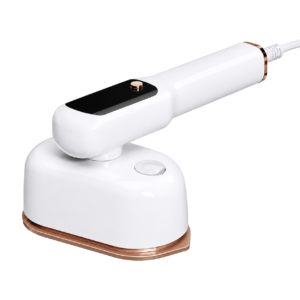
// Featured model — UAHGS11
UAHGS11 1200W garment steamer, 100mL, 6 steam gears
1200W · 100mL · 20g/min · 6 steam gears · 20-second heating · 7-hole cast-aluminum panel
From $9.80/unit at 500 units
Similar products
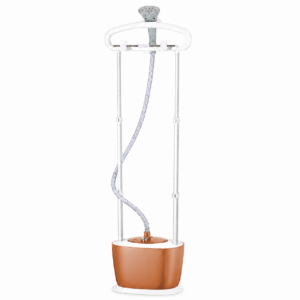
Dampfbürste, 2000W, 2L Tank, 10 Stufen, Standgerät
Vaporizador de prendas, 1000W, 140ml, plegable, panel de acero

Vaporizador de prendas, 1650W, 320ml, 3 niveles, panel de acero

Vaporizador de Roupas, 1000W, 150ml, Duas Marchas, Painel de Aço

Buharlı Giysi Düzleştirici, 1500W, 300ml, 7 Delikli Başlık
Ready to order or need a wholesale quote?
Steam Cleaners China manufactures steam cleaners and garment steamers direct from the Guilin, China factory of Guilin Use at Home Technology Co., LTD. OEM, private-label, and B2B programs are welcome. Tell us your market and volume.